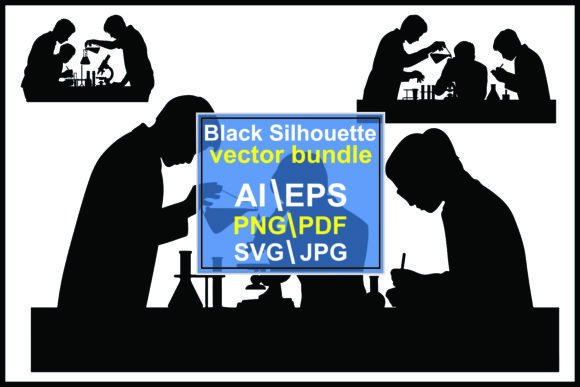
Silhouettes People a Laboratory Science: A Practical Guide to Scientific Vector Resources
In the realm of scientific communication, education, and academic publishing, visual clarity is paramount. Professionals often require imagery that conveys the essence of research without the distraction of unnecessary detail. This is where Silhouettes People a Laboratory Science becomes a critical resource. These graphic assets depict figures engaged in various stages of scientific inquiry—from pouring liquids into beakers to peering through microscopes—rendered as stark, high-contrast shapes against a clean background. Unlike detailed illustrations or stock photography, these silhouettes strip away color and texture to focus entirely on posture, action, and the relationship between the researcher and their equipment.
For educators designing lesson plans, scientists preparing grant proposals, or designers creating medical infographics, the choice of visual asset can significantly impact how information is received. The collection known as Silhouettes People a Laboratory Science offers a specific aesthetic utility that balances professionalism with versatility. By isolating the subject from the environment, these images allow for seamless integration into diverse layouts, ensuring that the message remains the focal point while the visual element provides context.
The Distinctive Value of Laboratory Silhouette Art
What sets Silhouettes People a Laboratory Science apart from other visual resources is its commitment to abstraction and adaptability. In a typical laboratory setting, the environment is complex, filled with colorful reagents, intricate machinery, and varied lighting conditions. While realistic photography captures this complexity, it can also introduce visual noise that distracts from the core concept being communicated. A silhouette reduces the scene to its fundamental geometry.
These designs are particularly effective because they rely on the viewer's familiarity with scientific archetypes. When a figure is shown holding a test tube or writing notes at a bench, the brain instantly recognizes the activity of "research" or "analysis." This cognitive shortcut allows for faster comprehension in educational materials or presentations. Furthermore, the black-and-white nature of the silhouettes ensures they remain neutral. They do not impose a specific brand color scheme or suggest a particular time period, making them timeless tools for academic and professional use.
The distinctiveness of this style also lies in its scalability. Because these are vector-based representations, they maintain crisp edges whether enlarged for a conference banner or shrunk for a thumbnail on a digital journal. The isolation on a white background further enhances their utility, allowing designers to easily place them over colored backgrounds, gradients, or textured paper without worrying about clipping paths or background removal.
Comparing Formats: Why File Types Matter
When evaluating resources like Silhouettes People a Laboratory Science, the file formats provided are just as important as the artistic content. Many generic image libraries offer only raster files (like JPG), which can pixelate when resized. In contrast, a comprehensive bundle typically includes multiple formats to suit different technical requirements. Understanding the tradeoffs between these formats is essential for selecting the right tool for your project.
- JPG and PNG: These raster formats are ideal for web use, social media, and documents where editing the vector paths is unnecessary. PNGs are generally preferred for silhouettes because they support transparency, allowing the black shape to sit cleanly on any background without a white box around it. JPGs are smaller in file size but may introduce compression artifacts around the sharp edges of the silhouette.
- AI and EPS: For professional designers using Adobe Illustrator or similar vector software, AI (Adobe Illustrator) and EPS (Encapsulated PostScript) files are indispensable. These formats preserve the mathematical data of the curves, enabling infinite scaling and easy color manipulation. If you need to change the silhouette from black to a brand-specific blue or adjust the thickness of a line representing a pipette, these are the files to use.
- SVG: Scalable Vector Graphics are the standard for modern web development. An SVG version of Silhouettes People a Laboratory Science ensures that the image loads quickly and looks perfect on high-resolution mobile screens and desktop monitors alike.
- PDF: Portable Document Format files are excellent for printing and sharing with clients who may not have design software but need to view the artwork at full resolution.
A bundle that consolidates all these types into a single zip file offers significant efficiency. Instead of purchasing separate licenses for each format, users receive a complete toolkit. However, it is important to note that managing a compressed archive requires basic digital literacy. Users must extract the files using tools like WinZip or WinRAR before they can access the individual assets. This step, while minor, is a necessary part of the workflow for utilizing such comprehensive collections.
Evaluating Use Cases: When to Choose Silhouettes
Determining whether Silhouettes People a Laboratory Science is the right choice depends heavily on the intended application. There are scenarios where this style excels and others where it might fall short compared to alternatives like 3D renders or photography.
Ideal Scenarios for Silhouette Usage
This style is the superior choice for infographics and data visualization. When presenting complex biological processes or chemical reaction pathways, adding detailed human faces or specific clothing textures can clutter the diagram. Silhouettes provide the necessary human element to show scale and interaction without competing with charts or graphs.
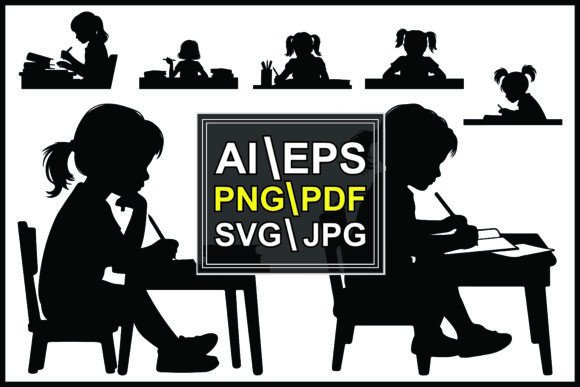
They are also highly effective for educational materials. In textbooks or university handouts, consistency is key. Using a set of silhouettes ensures that every illustration maintains a uniform look, reinforcing the academic tone. Whether depicting students collaborating in a group or a scientist observing a sample under a microscope, the lack of distracting detail keeps the learner focused on the procedure being described.
Furthermore, for branding and marketing in the medical field, silhouettes convey authority and objectivity. They avoid the potential legal or ethical issues associated with using real people's likenesses in advertising. A silhouette represents the "ideal" scientist or student, free from specific demographic markers, promoting an inclusive representation of the scientific community.
Limitations and Alternatives
Despite their strengths, silhouettes are not a universal solution. If a project requires conveying emotion, facial expressions, or specific details of lab safety gear (such as the type of goggles worn or the color-coding of hazardous waste containers), a silhouette will fail to communicate these nuances. In such cases, high-quality stock photography or detailed 3D illustrations are more appropriate.
Additionally, if the goal is to showcase a specific piece of proprietary equipment, the abstract nature of a silhouette might obscure the unique features of that machinery. Here, a custom photograph or a technical drawing would serve the purpose better. The decision ultimately rests on whether the priority is conceptual representation or specific detail.
Decision Factors for Researchers and Designers
Before committing to a specific visual resource, professionals should consider several practical factors. First, evaluate the technical requirements of your output. If you are working primarily in a print environment, ensure the bundle includes high-resolution vector files (EPS/AI). If your work is digital-first, prioritize SVG and PNG availability.
Second, consider the licensing flexibility. A robust collection like the one described allows usage for "any purpose," which covers commercial projects, academic publications, and personal portfolios. This broad license eliminates the need for negotiating rights for every new project, streamlining the production process. However, always verify the specific terms of use included in the documentation to ensure compliance with your organization's policies.
Third, assess the versatility of the collection. Does it cover the range of activities you need? A strong set of Silhouettes People a Laboratory Science should include diverse actions: pouring liquid, writing observations, analyzing data, and teamwork. Having a cohesive set that depicts collaboration and individual discovery allows for storytelling within your visual narrative. If the collection is too narrow, you may find yourself mixing styles, which can disrupt the visual harmony of your final product.
Conclusion: Making an Informed Choice
Selecting the right visual assets is a strategic decision that influences how effectively your scientific or educational message is conveyed. Silhouettes People a Laboratory Science offers a powerful blend of simplicity, versatility, and professional appeal. By focusing on the universal language of action and form, these graphics bridge the gap between complex scientific concepts and clear communication.
While they may not replace the need for detailed photography in every scenario, their ability to integrate seamlessly into various media makes them an invaluable addition to any designer's or researcher's toolkit. The availability of multiple file formats ensures that these assets can adapt to both print and digital workflows, providing long-term value. Ultimately, the choice to use silhouettes comes down to a desire for clarity and consistency. When the goal is to highlight the process of discovery, analysis, and teamwork without visual distraction, this approach stands out as a practical and effective solution.