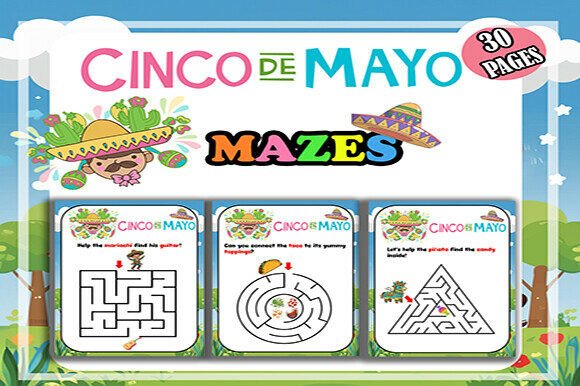
Cinco De Mayo Activities Maze Puzzles
Engaging Young Learners with Cultural Fun and Skill Development
Cinco De Mayo Activities Maze Puzzles offer a creative, hands-on way to celebrate Mexican culture while supporting early childhood development. Designed for Pre-K through 2nd Grade students, this no-prep resource blends cultural education with essential skill-building in a format that's both fun and functional. Whether you're a teacher looking for a quick classroom activity or a parent seeking a meaningful way to celebrate Cinco de Mayo at home, these mazes provide a versatile and effective solution.
What Makes Cinco De Mayo Maze Puzzles Stand Out?
At first glance, these mazes may seem like simple puzzles—but they're carefully crafted to deliver multiple developmental benefits. Each of the 15 unique mazes is themed around iconic symbols of Mexican culture, including sombreros, piñatas, maracas, tacos, and more. These aren't just random images; they're gateways to cultural awareness and curiosity for young learners.
- Visual Appeal: Bright, festive illustrations capture children's attention and make the activity feel like play rather than work.
- Educational Value: Beyond entertainment, the mazes help develop fine motor skills, hand-eye coordination, and visual tracking—all essential for early writing and reading readiness.
- Age-Appropriate Design: The puzzles are simple enough for preschoolers but still engaging for 1st and 2nd graders, offering just the right level of challenge.
- Included Answer Keys: With 15 answer keys provided, teachers and parents can quickly assess progress or allow children to self-check their work.
Why Teachers and Parents Are Turning to Maze Puzzles
One of the biggest challenges educators face is finding activities that are both educational and engaging. Cinco De Mayo Activities Maze Puzzles hit that sweet spot. They require minimal preparation—just print and go—making them ideal for busy classrooms or at-home learning.
Teachers love using them during Spanish Heritage Month or as part of a broader cultural curriculum. They’re also perfect for morning work, early finishers, or as a calming activity during transitions. For parents, these mazes offer a screen-free way to celebrate Cinco de Mayo while reinforcing key developmental milestones.
How These Mazes Support Early Learning Goals
While children are navigating their way through festive illustrations, they’re also building critical cognitive and motor skills:
- Fine Motor Development: Tracing paths with a pencil strengthens hand muscles and improves pencil grip and control.
- Visual Discrimination: Recognizing patterns and identifying correct paths helps build early reading and math skills.
- Problem-Solving: Navigating dead ends and choosing the correct path fosters logical thinking and decision-making.
- Focus and Patience: Completing a maze requires sustained attention, helping children build concentration and perseverance.
Practical Applications Across Learning Environments
These mazes are far more versatile than they appear. Here are a few real-world applications where they can make a meaningful impact:
- Classroom Centers: Use them in fine motor or literacy centers to provide independent, self-paced learning.
- Spanish Language Learning: Pair the mazes with vocabulary lessons to reinforce cultural terms in context.
- Homeschool Activities: Incorporate them into a unit study on Mexico or holidays around the world.
- After-School Enrichment: Offer them as part of a themed learning club or cultural celebration event.
- Therapeutic Use: Occupational therapists may find them useful for building hand control and coordination in a fun context.
Using the Mazes Beyond the Classroom
Even outside of formal education, these puzzles can serve as a valuable tool. Parents can use them to spark conversations about diversity, history, and traditions. They also make great party favors or activity sheets for Cinco de Mayo celebrations at home or in community centers. The festive themes make them perfect for themed events or holiday parties where children need something structured yet enjoyable to do.
What to Look for When Choosing Educational Printables
Not all printable educational resources are created equal. When selecting materials like Cinco De Mayo Activities Maze Puzzles, it's important to consider the following factors:
- Developmental Appropriateness: Ensure the difficulty level matches the child's current abilities and offers room to grow.
- Reusability: Resources that can be used across multiple grade levels or reused in different contexts offer better long-term value.
- Visual Clarity: Clean lines and clear paths make the mazes easier to follow and less overwhelming for young eyes.
- Thematic Relevance: Choose materials that tie into broader learning goals or cultural themes you're exploring.
- Print Quality: High-resolution graphics ensure crisp lines and legible details, especially when printing at home.
Maximizing the Value of Maze Puzzles
To get the most out of these mazes, consider integrating them into a broader learning experience. For example:
- Pair each maze with a short story or fact about the featured item—like the history of the piñata or the symbolism of the Mexican flag.
- Encourage children to color the maze after completing it, reinforcing creativity and ownership of their work.
- Use the mazes as a springboard for a discussion about geography, traditions, or music associated with Mexico.
- Set up a self-check station with the answer keys so students can independently verify their progress.
Final Thoughts on Cinco De Mayo Activities Maze Puzzles
In a world where screen time often dominates, resources like Cinco De Mayo Activities Maze Puzzles offer a refreshing alternative. They combine cultural learning with developmental benefits in a format that’s easy to use and visually engaging. Whether you're a teacher looking to enhance your curriculum or a parent wanting to celebrate a holiday meaningfully, these mazes are a smart, no-stress choice. With 15 unique puzzles and answer keys included, they provide hours of educational entertainment that aligns with both learning standards and real-world interests.