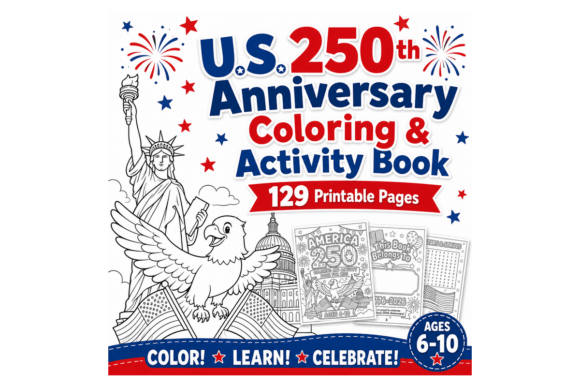
U.S. 250th Activity Book for Kids
Designing for young audiences requires a careful balance of educational value and visual appeal—especially when celebrating a milestone as significant as the United States' 250th anniversary. The U.S. 250th Activity Book for Kids serves as a prime example of how thoughtful graphic design can elevate a learning tool into a versatile visual asset with wide-reaching applications. From classroom use to digital marketing, this printable activity book demonstrates how design elements like typography, color theory, and layout structure can be leveraged to create engaging, brand-aligned content.
Visual Design That Educates and Engages
At its core, the U.S. 250th Activity Book is more than just a collection of coloring pages and puzzles—it’s a well-structured visual communication tool. The layout design ensures clarity and ease of use, with consistent margins, readable fonts, and a logical flow that guides children through historical content in a digestible format. Each page is a testament to how visual hierarchy and white space can improve comprehension, especially in educational materials.
The activity book’s color palette is intentionally patriotic, using red, blue, and white tones to reinforce brand identity while maintaining accessibility for young readers. These design choices aren’t just aesthetic—they play a crucial role in reinforcing brand recognition and emotional connection, principles that extend directly into professional branding and marketing strategies.
Applications in Branding and Marketing
For marketers and brand strategists, this activity book offers a case study in how to align design with messaging. Its cohesive visual style can be adapted for promotional materials, social media graphics, or even merchandise that supports a larger brand campaign around the 250th anniversary. The same design assets—icons, illustrations, and layout templates—can be repurposed across print and digital platforms, ensuring a unified brand presence.
- Use illustrations from the book in social media posts to create continuity across content
- Incorporate design elements into email newsletters for themed educational campaigns
- Adapt the layout structure for branded educational PDFs or downloadable resources
Design Considerations for Multi-Use Assets
One of the standout features of the U.S. 250th Activity Book is its versatility. It includes multiple file formats—PDF, PNG, and answer keys—making it easy to integrate into both print and digital workflows. This adaptability is essential in modern design, where cross-platform consistency is key. Designers should always consider scalability, resolution, and format compatibility when selecting assets for use in different media.
Typography also plays a subtle but powerful role. The fonts used throughout the book are clean, legible, and age-appropriate—factors that are just as important in UI design, editorial layouts, and packaging design. Choosing the right typeface can dramatically influence readability and user experience, whether in a children’s activity book or a corporate website.
Enhancing User Engagement Through Interactive Design
From mazes to spot-the-difference puzzles, the interactive elements in the activity book encourage active participation. This principle translates well into digital design, especially in web and app interfaces where user engagement hinges on intuitive, interactive elements. Designers can take inspiration from these activity pages to create more dynamic landing pages, gamified learning modules, or interactive infographics.
- Use visual cues from the book to guide user attention in digital interfaces
- Incorporate playful illustrations to make complex content more approachable
- Apply consistent iconography to improve navigation and usability
Ultimately, the U.S. 250th Activity Book for Kids exemplifies how strong visual design can support both educational and branding goals. Whether used in the classroom or repurposed for marketing and digital content, its design principles offer valuable insights for creators aiming to build engaging, cohesive, and visually compelling projects. By focusing on clarity, consistency, and creative flexibility, designers can elevate their work and ensure it resonates with audiences across multiple platforms.